New Massachusetts Bill Backs Online Casinos, Targets Sweepstakes Platforms
Tuesday 26 de August 2025 / 12:00
⏱ 2 min read
(Boston).- Massachusetts may be on the verge of legalizing online casino gambling, thanks to a new proposal from Rep. David Muradian. Introduced as House Bill 4431 on August 18, the legislation seeks to regulate digital casino platforms while firmly prohibiting sweepstakes-style gaming throughout the state.
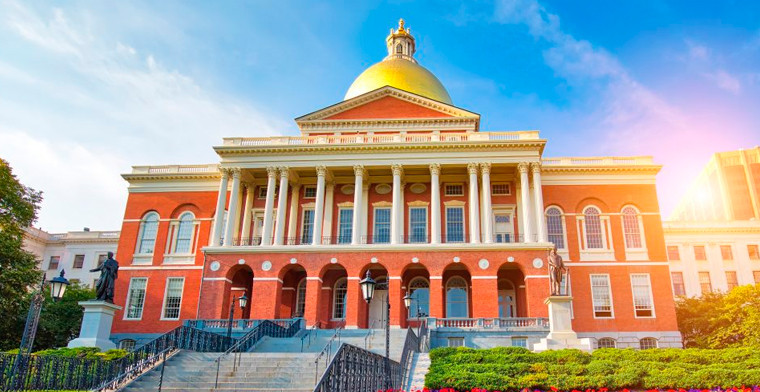
The legislation, now with the Joint Committee on Economic Development and Emerging Technologies, positions iGaming as a tool to steer players away from unregulated markets while boosting state revenue and strengthening consumer protections.
Starting January 1, 2026, the bill would legalize online table games, poker, slots, and skill-based games, overseen by the Massachusetts Gaming Commission (MGC).
Licensing, Tax, and Responsible Gaming Provisions
Under the bill, existing casino operators—Encore Boston Harbor, MGM Springfield, and Plainridge Park - would be eligible to apply for online casino licenses. Each license-holder could operate up to three skins, which wouldn’t have to share the casino’s brand. This could allow popular platforms like FanDuel and DraftKings to partner with in-state casinos.
Online casinos would face a 15% tax on adjusted gross revenue. Funds from this tax would support a new Player Health Program, promoting responsible gambling and offering prevention and recovery services.
To ensure ethical operations, the bill outlines several safeguards:
- Bans on credit card deposits.
- No marketing that appeals to under-21s or targets college campuses.
- Prohibition of “risk-free” promotional language.
- AI-based monitoring of high-risk player behavior.
- A voluntary, national self-exclusion list.
- Authorization for Massachusetts to join multistate iGaming compacts like MSIGA.
Ban on Online Sweepstakes Gaming
Alongside iGaming legalization, the bill introduces a strict ban on online sweepstakes gaming. Defined as casino-like games awarding prizes by chance and using dual-currency models, these platforms would be illegal to operate, promote, or support.
Violators could face fines between $10,000 and $100,000 per offense, loss of gaming licenses, and up to two years in prison for repeat violations. The broad language of the bill could also apply to affiliates, payment providers, and other third-party services assisting such operations.
This move follows similar legislation passed this year in states like Montana, Connecticut, and New Jersey. New York and California are also considering bans.
Industry Pushback
The Social Gaming Leadership Alliance (SGLA) strongly criticized the proposal. Executive Director Jeff Duncan warned that the bill would criminalize legitimate, free-to-play social games.
“Massachusetts has long been a hub of innovation, technology, and economic leadership, but this proposal sends the wrong message,”Duncan said. “A blanket prohibition on social games would strip away lawful entertainment, criminalize legitimate businesses, and undermine an industry that... could add to the state’s annual revenue.”
Casino Revenue Flatlines as Gambling Sentiment Shifts
The proposal comes amid stagnating casino revenues in Massachusetts. In July 2025, total revenue rose just 0.02% year-over-year to $99.5 million. While Plainridge Park and MGM Springfield saw gains of 6.2% and 1.8% respectively, Encore Boston Harbor dropped 2.1% to $60.2 million—still accounting for over 60% of total casino revenue.
Slot revenues rose to $72.2 million statewide, but table game earnings fell to $27.3 million. A recent survey also found that public attitudes toward gambling are growing more negative, even as play intensifies.
Categoría:Legislation
Tags: Sin tags
País: United States
Región: North America




Event







SiGMA North America 2026
01 de September 2026
LatAm Regulators Discussed Illegal Gambling and Innovation at SiGMA North America
(Mexico City, SoloAzar Exclusive).- The panel "The Red Pen Forum: Regulators Respond to the Industry," held during SiGMA North America 2026, brought together representatives from Uruguay, Argentina, Puerto Rico, and Honduras to analyze regulatory challenges, digital transformation, illegal gambling, and the need to adapt lotteries for new generations. The conference was moderated by Rodrigo Cigliutti, Executive Director of CIBELAE (Ibero-American Corporation of State Lotteries and Betting), and featured the participation of Marcelo Visconti, National Director of Lotteries and Quinielas of Uruguay; Carlos Moyano, President of IAFAS Entre Ríos, Argentina; Heidi Hernández Olivo, Deputy Secretary of the Puerto Rico Lottery; and Lissa Mencía, General Director of Lottery Operations and Games at Loto Honduras.
Monday 28 Sep 2026 / 12:00
SiGMA North America Addressed Crisis Management in iGaming
(Mexico, SoloAzar Exclusive).- During SiGMA North America 2026, Rosa Ochoa, founder of the Blue Global Gaming platform and strategic advisor for gaming operators; Iliana María Pineda Echeverri, Chief Legal & Compliance Officer at Wplay.co; Iraid Rosales, Country Manager Mexico at Amusnet; and Elizabeth Maya Cano, Executive President of CORNAZAR, analyzed the key factors in managing crisis situations within the iGaming industry, with a special focus on transparency, communication, technology, and preparation.
Friday 25 Sep 2026 / 12:00
Affiliates and Acquisition: Keys to Regulated Markets in North America
(Mexico City, SoloAzar Exclusive).- During SiGMA North America 2026, Cristopher Guzmán Reyes, Head of Affiliates at Logrand Entertainment Group; Guga Júnior, influencer and slots expert at Scalar Partners; Andrés Gómez, Head of Latin America Go-to-Market Strategy at Admattic; Yambot Aguilera, Gaming and Finance Sales Director at Google; and Paula Gabriel Jiménez, Advertising Client Growth Director for Microsoft at Aleph, analyzed the state and provincial affiliate ecosystem in North America, as well as the acquisition challenges in regulated markets.
Thursday 24 Sep 2026 / 12:00
SUSCRIBIRSE
Para suscribirse a nuestro newsletter, complete sus datos
Reciba todo el contenido más reciente en su correo electrónico varias veces al mes.