"Peru is an example of a regulated environment in South America"
⏱ 5 min read
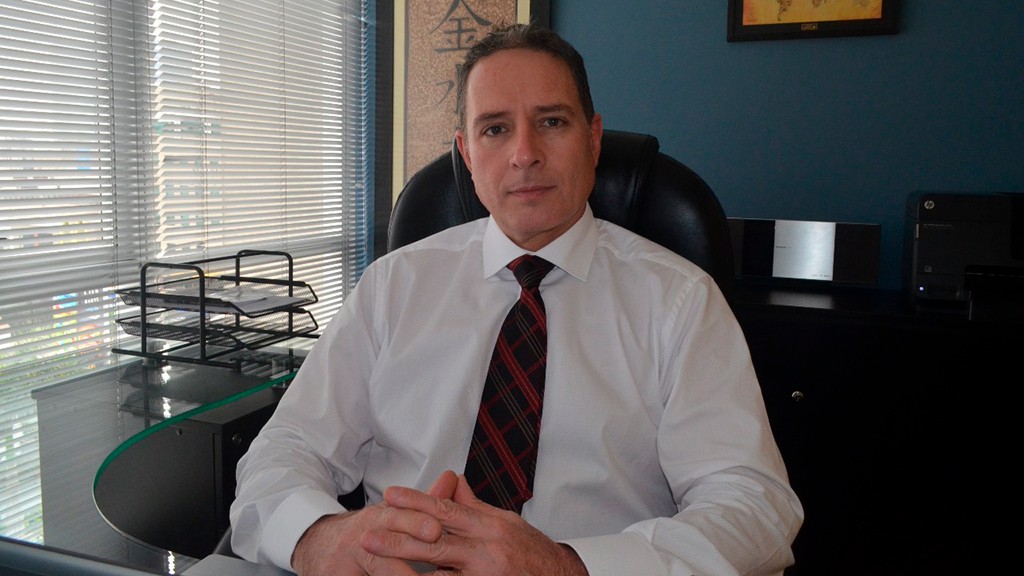
(Peru, SoloAzar Exclusive).- After misleading data about the gaming industry in Peru published by local media and replicated by this site, SoloAzar interviewed exclusively José Miguel Chueca Santa María, General Manager JMC Gaming Consultants, who as understood in this subject could refute these incorrect data and give a deeper and more accurate view of the current situation of the sector in that country.
How is the present of the casino and slot machine games sector in Peru?
This is an absolutely formal industry, regulated and controlled at the highest level. I would dare say that in the country there is no other that has such controls.
For example, we must report in real time to regulatory entities about all the operational and financial transactions that occur in each of the slot machines and gaming tables in the country, individually. This is not seen in transportation, fishing or mining, to name three examples.
We must comply with complementary regulations, such as those related to the SPLAFT, System for the Prevention of Money Laundering and Terrorism Financing, where we are bound by law, and must designate a Compliance Officer before the FIU, to keep track of suspicious transactions in the courtroom (if any), register of prize winners, etc., with periodic reports to the FIU and DGJCMT, in addition to unannounced visits. Each company, for this purpose, proposes insurance policies in prevention and control, which are part of its SPLAFT Plan, in which all the members of the company are trained, committing them to the success of this management.
At this time, I could tell you that barring some very isolated and unfortunate incidents, there is no illegal gambling in Peru. The Authority (DGJCMT) has achieved an impeccable management in the control and eradication of illegality.
Of course there are things to work on yet, since this is a dynamic and intensive industry in technological development. All of us in the field know that Peru is an example of a regulated environment in South America. What is unfortunate is that some of our own authorities do not know it.
What is the tax burden that operators must face?
Like any company, we pay 30% of income tax (profits) at the end of the year without any type of preference or exoneration, with monthly advances.
Like all business with attention to the public, we pay the municipal taxes of operation, facade and others. We have no preference, obviously.
Where the difference comes is in the treatment of IGV, VAT in other countries, which is the sales tax. When we acquire our equipment, and given that our industry "does not sell time" (it would be nice to buy time from time to time) nor does it sell a part of the equipment every time it is used (it is absurd to think about that), this IGV is not transferable and therefore it is assumed as cost. This is based on the non-effect of the game of Article 2 of the General Sales Tax, which is levied on the sale of goods and services, where gambling activities are not included.
Outside of it we have a Special Tax to the Game, with an aliquot of 12%. This tax, in concept, is a Selective Consumption Tax applied only to our industry. This tax is paid on the daily gross income of each team and, although it is considered an expense, it is not an advance of annual rent, as it happens with other industries.
That is why we all ask ourselves how it is that we can make claims so lightly related to the lack of contribution from our industry in tax collection, when the consolidated pressure is close to 50%.
How is gambling addiction treated in the country?
In the country there is a Law for the prevention of pathological gambling, which we are obliged to observe and respect. In each game room or casino there is an action plan that begins with the identification of the attendees to the rooms and the verification of their non-presence in the register of gamblers. This registry, which is powered by denunciation or self-exclusion, is a national database referring to casinos and slot machine rooms. At the moment there are just over 300 registered gamblers in Peru, which corresponds to 0.0009375% of the population. Even with the grossest margin of error that we could apply, we are at an immeasurable distance from the irresponsible figures that have been handled in public media, probably due to ignorance of reality, which placed the problem in 5% of the population. In any case, if that figure were real, the regulatory effort should be directed towards the sectors and businesses where this phenomenon is happening, which are not the casinos and slot machines.
Particularly we act proactively and efficiently in the prevention of compulsive gambling or pathological gambling. At this point we must clarify that far from what is popularly believed, to think that gambling is a vice, is wrong. Reviewing sources of public information, we can verify that gambling is a difficulty to control impulses, and that in a certain sense it tends to manifest itself in the compulsive practice of one or more games of skill or chance, without necessarily betting on they, so it is not an aspect related to casino games exclusively or necessarily, as so irresponsibly is usually pointed out. For all this, gambling addiction should not be confused with a vice, since in reality it is a serious chronic disease, an addiction and that does not correspond exclusively to gambling.
It is also important to clarify that gambling is not necessarily casino or slots games. The lottery is a game of chance (not dependent on the DGJCMT in Peru), console games include gambling options, card games or dice in private clubs are also games of chance, etc. Stigmatizing casinos and slots as centers of vice and gambling (which is not the same), is an easy to be eradicated socially and should start to understand these locals for what they are; entertainment centers.
In your opinion, then, are there other activities that could trigger gambling behavior, in addition to gambling?
Of course they exist. Sports betting, which is not a game of chance, can trigger this addiction. The games of console or games in networks can make a gambler of a gamer. The difference, probably, is that as it happens at home we see it as something less dramatic or at least more normal, when essentially it is the same.
I understand that talking about casinos and slots is much more sales and sensationalist, but this can not pretend to show a reality that is not true, nor hold our industry accountable blaming whimsical figures stemming from a stigma.
Could we say then that there is a misinformation of the reality of the casino and slot machine game industry in Peru?
Of course there is. I also think that you have applied very well the term "industry", since that is what we are. We generate employment and well-being, we are formal companies that comply with labor laws, we promote formal employment and, above all, we provide a space for leisure and support for sectors of the population that, due to their age or condition, do not have it at home or in their homes. Nearby circles. We promote social participation through aid to various sectors in need in the form of educational infrastructure, health, etc. We simply choose to do it in a quiet way, without advertising because we understand the social projection in that way, not as an advertisement.
Unfortunately, as in other areas of industrial development in Peru, there is no real knowledge of how the industry works. They have read all kinds of figures and statements in recent weeks, most being wrong and out of place, when not exaggerated.
Categoría:Others
Tags: Sin tags
País: Peru




Event









SBC Summit 2026
29 de September 2026
The Future of Sports Engagement Beyond the Court
Friday 16 Oct 2026 / 12:00
Ninja Gaming Focuses on Innovation and Global Growth After SBC Summit
Friday 16 Oct 2026 / 12:00
SBC Summit 2026 Wraps Up Record-Breaking Lisbon Edition
Thursday 15 Oct 2026 / 12:00
SUSCRIBIRSE
Para suscribirse a nuestro newsletter, complete sus datos
Reciba todo el contenido más reciente en su correo electrónico varias veces al mes.