Why Arizona Has Surpassed Nevada in Sports Betting
Friday 28 de June 2024 / 12:00
⏱ 3 min read
(Arizona).- The ink wasn’t even dry on the U.S. Supreme Court’s 2018 ruling that opened the door for states to legalize sports betting when predictions began surfacing about the Nevada market’s expected tumble in rankings. Six years later, Nevada is not even the leading sports betting state in the Southwest. That distinction now belongs to Arizona.
Just 32 months after Arizona sportsbooks launched sports betting, April marked the first month ever that they took in more wagers than their Nevada counterparts. Nevada sportsbooks took in almost $569.3 million in sports wagers through the month while Arizona operators booked $656.3 million in bets.
Eliers & Krejcik Gaming analyst Chris Krafcik said April’s results will be the new normal for Nevada, which was the only state with legal sportsbooks before the Supreme Court’s May 2018 decision to throw out the 1992 Professional and Amateur Sports Protection Act (PASPA).
“Nevada and Arizona share a border, but their sports betting markets are not comparable,” said Krafcik, who follows sports betting and digital gaming for the Southern California advisory firm.
Arizona, with its Phoenix metropolitan area population of more than 5 million — the 10th largest city in the nation — draws wagers from its residents, while the tourist market drives sports betting in Nevada, according to Krafick.
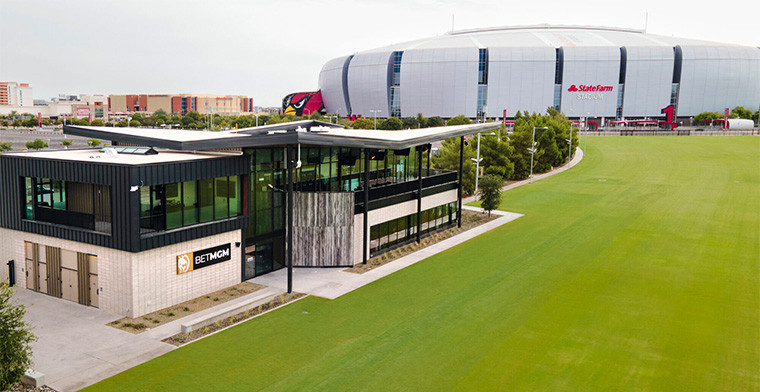
Also contributing to Arizona’s ranking is how residents wager: 99 percent of the bets are made through mobile apps. Arizona has a few in-person tribal casino sportsbooks and sports betting venues connected to the Phoenix sports stadiums that are operated by FanDuel, DraftKings, BetMGM and Caesars Sportsbook.
The biggest difference between sports betting markets in Arizona and Nevada? The Grand Canyon state’s gaming laws allow for remote registration to sign up for online sports betting, while Nevada still requires prospective sports gamblers to register in person.
Growth of Nevada’s mobile sports betting business, which still accounted for 65.8 percent of all sports wagers in 2023, is hamstrung by the in-person registration requirement — most of the 38 states that have legalized sports betting allow remote registration.
Krajcik said Nevada’s lack of remote registration has reduced the sports wagering totals from visitors and has contributed to keeping the nation’s two leading sports betting operators, FanDuel and DraftKings, away from directly operating in the state.
Many Nevada casino operators, led by Red Rock Resorts and others with large sportsbooks, have long opposed remote registration in favor of in-person signups. Gaming executives have said they have invested millions of dollars into their sportsbooks, which serve as a draw for customers who also spend money at non-gaming amenities, such as restaurants.
They also point out that sports betting is just a small part of the Nevada gaming industry’s overall revenue stream — only 3 percent of last year's record-breaking statewide total of $15.5 billion. Nationally in 2023, sports betting revenue of $11 billion was 16.5 percent of the overall gaming revenue of $66.6 billion, according to the American Gaming Association.
But not everyone feels that way. MGM Resorts International CEO Bill Hornbuckle — whose company also operates a combination sportsbook, sports bar and tavern in Glendale, Arizona — expressed support for remote sports betting registration in 2021, calling the current system “arcane.” He has not backed away from that opinion.
Chris Altruda, who writes for the sports betting news website SportsHandle, suggested the Arizona market’s increase came from Phoenix’s hosting of the NCAA Men’s Basketball Tournament’s Final Four at State Farm Stadium from April 6-8.
Nevada took in almost $8.3 billion in sports wagers in 2023, trailing New York ($19.2 billion), New Jersey ($12 billion) and Illinois ($11.6 billion) as the largest sports betting states. Arizona trailed Nevada by three spots with $6.57 billion in wagers.
However, Arizona’s sports betting revenue was $557 million in 2023, compared to Nevada’s $481.3 million, which was a single-year record for the Silver State.
With college football and the NFL seasons roughly 10 weeks away, Altruda suggested Arizona could remain ahead of Nevada, especially if recently launched sports betting apps from Fanatics and ESPN perform ahead of expectations.
Krafcik said the gap between Arizona and Nevada will widen if the status quo continues. He predicted the Nevada market would settle in the $500 million to $600 million range for annual sports betting revenue, with Arizona reaching between $700 million to $800 million.
Categoría:Sportsbook
Tags: Sin tags
País: United States
Región: North America




Event
iGaming tech leader Cristina Turbatu commends ICE Barcelona's vision for Hall 7
Tuesday 20 Oct 2026 / 12:00
CGA Showcases Canada’s Competitive Edge at ICE Barcelona
Tuesday 13 Oct 2026 / 12:00
ICE Barcelona Hosts WorldGaming-Backed Nineball Championship in 2027
Tuesday 06 Oct 2026 / 12:00
SUSCRIBIRSE
Para suscribirse a nuestro newsletter, complete sus datos
Reciba todo el contenido más reciente en su correo electrónico varias veces al mes.