David Moniz on the Dominican Republic's gambling bill: "Not all of our concerns have been fully heard"
Friday 11 de July 2025 / 12:00
⏱ 4 min read
(Santo Domingo, SoloAzar Exclusive).- David Moniz, president of the Dominican Association of Casinos and Gaming (ADCJ), offers a critical perspective on the new Gambling Bill introduced by the Dominican government. He argues that the proposal lacks the necessary balance and warns of potential negative consequences for both the gaming industry and the Dominican Republic’s economy.
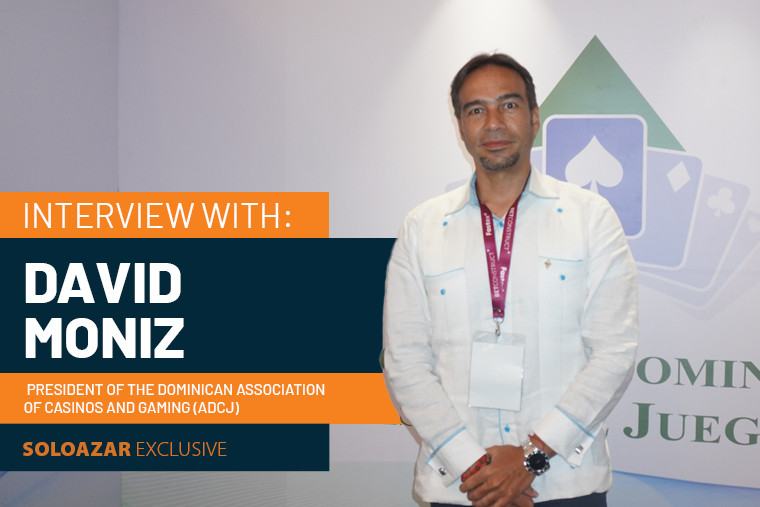
In an exclusive interview with SoloAzar, David Moniz, president of the Dominican Association of Casinos and Gaming (ADCJ), questions the viability and approach of the recent Gambling bill promoted by the Dominican Republic government. According to Moniz, the initiative lacks a fair and equitable vision, which could have an adverse impact on the entertainment industry, jeopardize jobs, and generate economic distortions.
What do you consider to be the most controversial points of the bill?
From our perspective, the most controversial points of the bill lie mainly in the following four points:
Disproportionate increase in taxes and levies: We propose a review of the proposed tax rates, as we believe that an excessive increase could stifle casino operations and discourage investment, negatively impacting the sector's competitiveness. Although the bill maintains similar rates for table games and similar rates for machine games, it fails to mention and/or clarify certain technical tax aspects that would significantly affect tax contributions.
· Operating restrictions: We are concerned about certain restrictions that could impact the viability of our businesses, such as those related to hours (the project restricts casinos and slot machines to 4:00 p.m. to 6:00 a.m.) or the range of games, without considering the reality and needs of the market.
Lack of clarity in the application of new regulations: We identified ambiguities in some articles that could generate legal uncertainty and difficulties in implementation, which could lead to diverse interpretations and potential conflicts. This could include, for example, the use of terminology such as "slot rooms" and "slot machines" within the same article; a ban on all advertising, on the one hand, and another article that allows advertising in certain forms under certain conditions, among others.
· License issuance and renewal process: We consider the proposed conditions for issuing and renewing licenses to be excessively stringent and unworkable in the case at hand (a five-year casino license), which could hinder the continuity of legitimate and established operations.
Do you think that if the project is implemented, it will generate job losses?
Unfortunately, yes, we believe this project, as currently planned, could lead to significant job losses in the sector. Casinos are major employers, generating thousands of direct and indirect jobs. An excessive increase in the tax burden and operating restrictions could lead to the closure of establishments or a drastic reduction in staff to maintain profitability. This would not only affect employees and their families, but also the national economy.
You pointed out that the project's dissemination was "hasty." Could you expand on that idea?
When we stated that the dissemination of the draft was "hasty," we meant that the process of dissemination and discussion with key stakeholders in the sector was, in our opinion, insufficient. A project of this magnitude, with such a profound impact on the economy and employment, requires a thorough analysis and open, constructive dialogue with all stakeholders. The lack of adequate time to review, analyze, and propose changes to the draft before its public dissemination prevented a broader consensus and more robust legislation.
Have the ADCJ's concerns been heard?
Although we have recently approached the Senate and presented our concerns and proposals, we feel that not all of our concerns have been fully heard and incorporated into the current versions of the bill. We hope that in the final stages of the legislative process, the experience and suggestions we have provided as casino representatives will be more carefully considered.
Do you think the Dominican Republic's current gambling legislation is outdated?
Yes, we believe that the Dominican Republic's current gambling legislation is outdated in many ways. It's a decades-old law that doesn't address the realities and challenges of the modern gaming sector, including the emergence of online gaming, new technologies, and international best practices in regulation, anti-money laundering, and responsible gaming. Therefore, we support a new law that would modernize and strengthen the industry, but always within a framework that promotes sustainability and growth.
What would be your final message to legislators and the public regarding this law and the future of the gambling sector in the Dominican Republic?
Our final message to legislators and the public is clear: the gaming sector is an important contributor to the Dominican economy, a generator of employment and entertainment. We are a key player in the tourism sector's production chain, which is a significant force in the Dominican economy. We are committed to transparency, legality, sustainability, and responsible gaming. We support the need for a new law, but we urge legislators to consider the potential negative repercussions of a bill that is not balanced and fair.
We call for an open and constructive dialogue that will allow for the creation of modern legislation that encourages investment, protects existing jobs, and promotes the orderly and sustainable growth of the industry, always for the benefit of the country.
Categoría:Exclusive
Tags: Sin tags
País: Dominican Republic
Región: Central America and Caribbean




Event









SiGMA North America 2026
01 de September 2026
LatAm Regulators Discussed Illegal Gambling and Innovation at SiGMA North America
(Mexico City, SoloAzar Exclusive).- The panel "The Red Pen Forum: Regulators Respond to the Industry," held during SiGMA North America 2026, brought together representatives from Uruguay, Argentina, Puerto Rico, and Honduras to analyze regulatory challenges, digital transformation, illegal gambling, and the need to adapt lotteries for new generations. The conference was moderated by Rodrigo Cigliutti, Executive Director of CIBELAE (Ibero-American Corporation of State Lotteries and Betting), and featured the participation of Marcelo Visconti, National Director of Lotteries and Quinielas of Uruguay; Carlos Moyano, President of IAFAS Entre Ríos, Argentina; Heidi Hernández Olivo, Deputy Secretary of the Puerto Rico Lottery; and Lissa Mencía, General Director of Lottery Operations and Games at Loto Honduras.
Monday 28 Sep 2026 / 12:00
SiGMA North America Addressed Crisis Management in iGaming
(Mexico, SoloAzar Exclusive).- During SiGMA North America 2026, Rosa Ochoa, founder of the Blue Global Gaming platform and strategic advisor for gaming operators; Iliana María Pineda Echeverri, Chief Legal & Compliance Officer at Wplay.co; Iraid Rosales, Country Manager Mexico at Amusnet; and Elizabeth Maya Cano, Executive President of CORNAZAR, analyzed the key factors in managing crisis situations within the iGaming industry, with a special focus on transparency, communication, technology, and preparation.
Friday 25 Sep 2026 / 12:00
Affiliates and Acquisition: Keys to Regulated Markets in North America
(Mexico City, SoloAzar Exclusive).- During SiGMA North America 2026, Cristopher Guzmán Reyes, Head of Affiliates at Logrand Entertainment Group; Guga Júnior, influencer and slots expert at Scalar Partners; Andrés Gómez, Head of Latin America Go-to-Market Strategy at Admattic; Yambot Aguilera, Gaming and Finance Sales Director at Google; and Paula Gabriel Jiménez, Advertising Client Growth Director for Microsoft at Aleph, analyzed the state and provincial affiliate ecosystem in North America, as well as the acquisition challenges in regulated markets.
Thursday 24 Sep 2026 / 12:00
SUSCRIBIRSE
Para suscribirse a nuestro newsletter, complete sus datos
Reciba todo el contenido más reciente en su correo electrónico varias veces al mes.