Player motivations and gender differences
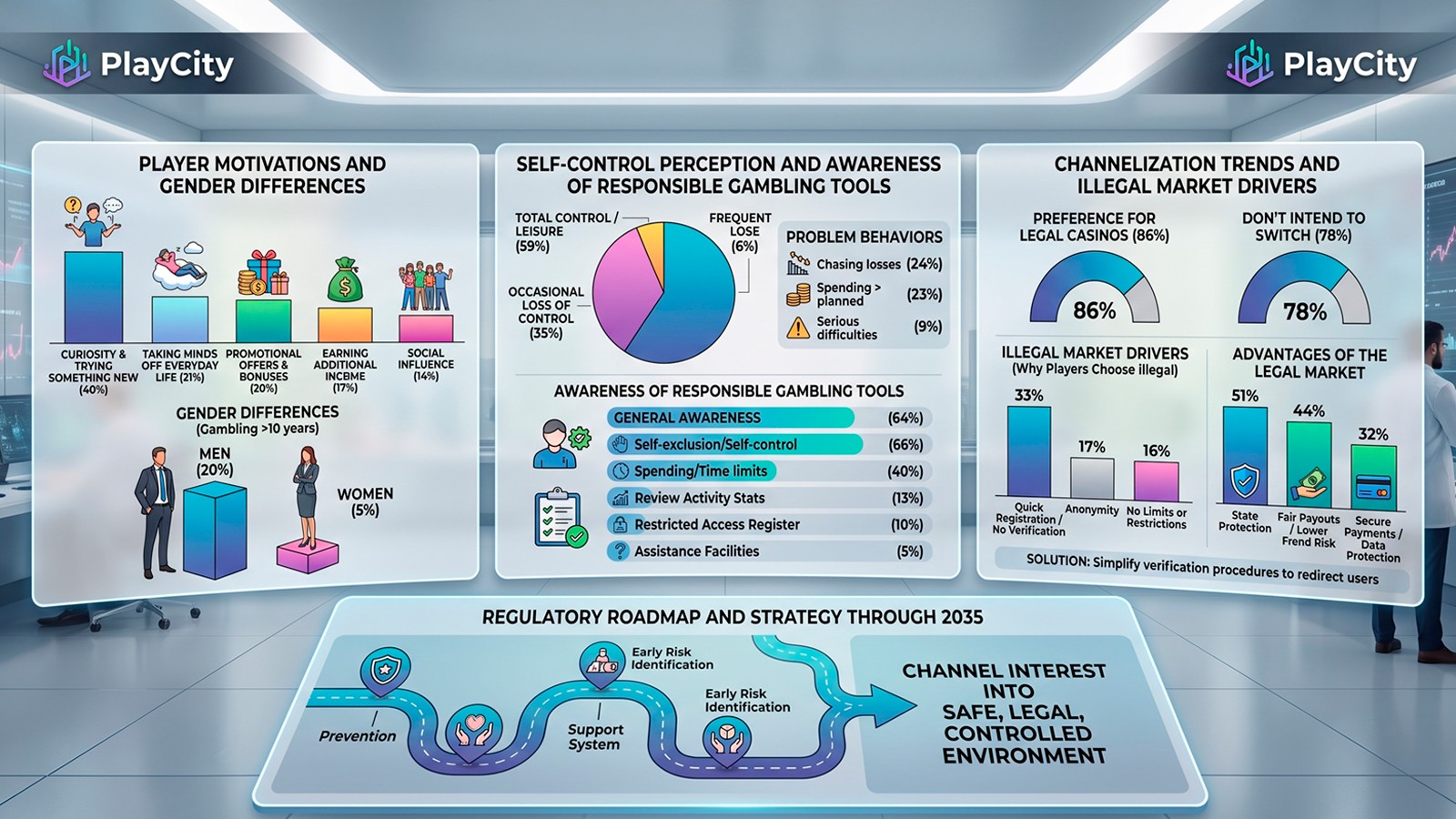
The key finding challenges a widespread stereotype: while the general population believed people gamble primarily to make money, earning additional income drives only around 17% of gamblers. By contrast, the most common reason to start gambling was simple curiosity and trying something new (40%), followed by taking their minds off everyday life (21%), promotional offers and bonuses (20%), and social influence from friends or acquaintances (14%).
Furthermore, gambling experience differs significantly by gender: 20% of men reported having gambled for more than ten years, compared with just 5% of women, indicating a longer-term history among male players.
Self-control perception and awareness of responsible gambling tools
Regarding player control, 59% of respondents consider their gambling under control and view it as regular leisure. However, 35% admitted to occasionally losing control, while 6% said this happens frequently. Additionally, 24% had occasionally tried to chase their losses, 23% spent more money than initially planned, and for 9%, gambling led to serious financial, family, or life-related difficulties.
Although 64% are generally aware of responsible gambling tools, gaps remain: 66% know about self-exclusion and self-control options, and 40% are aware of spending and time limits. However, only 13% know they can review their personal activity statistics, 10% are aware of the Register of Persons with Restricted Access to Gambling, and just 5% know about facilities providing assistance for gambling addiction.
Channelization trends and illegal market drivers
Although gambling existed prior to legalization, 86% of respondents consciously prefer legal online casinos, and 78% do not intend to switch to illegal operators. Nonetheless, the shadow segment persists: 20% know people who gamble at illegal casinos. Players choose illegal platforms due to quick registration without identity verification (33%), anonymity (17%), and the absence of limits or restrictions (16%).
Conversely, gamblers identify state protection (51%), a lower risk of fraud and guaranteed fair payouts (44%), and secure payments with banking data protection (32%) as the main advantages of the legal market. Simplifying verification procedures could help redirect users from illegal operators toward legal platforms.
Regulatory roadmap and Strategy through 2035
These findings are already informing state policies, including the Strategy for Combating Gambling Addiction through 2035, which provides for stronger addiction prevention measures, earlier risk identification, and a dedicated support system. The key takeaway remains clear: people gamble primarily for entertainment, emotions, and curiosity rather than financial gain. Therefore, the regulator’s task is not to suppress this interest, but to channel it into a safe, legal, and controlled environment.