$75M Encore Boston Casino Land Deal to Undergo New Scrutiny After Court Order
Friday 27 de May 2022 / 11:57
⏱ 4 min read
(Massachusetts).- The actions of the Massachusetts Gaming Commission almost a decade ago could be put under a new microscope after the Supreme Judicial Court ruled Monday that a lower court should look more closely at the "highly unusual character of the commission's actions" related to the award of a casino license to Wynn Resorts and the casino company's purchase of land in Everett.
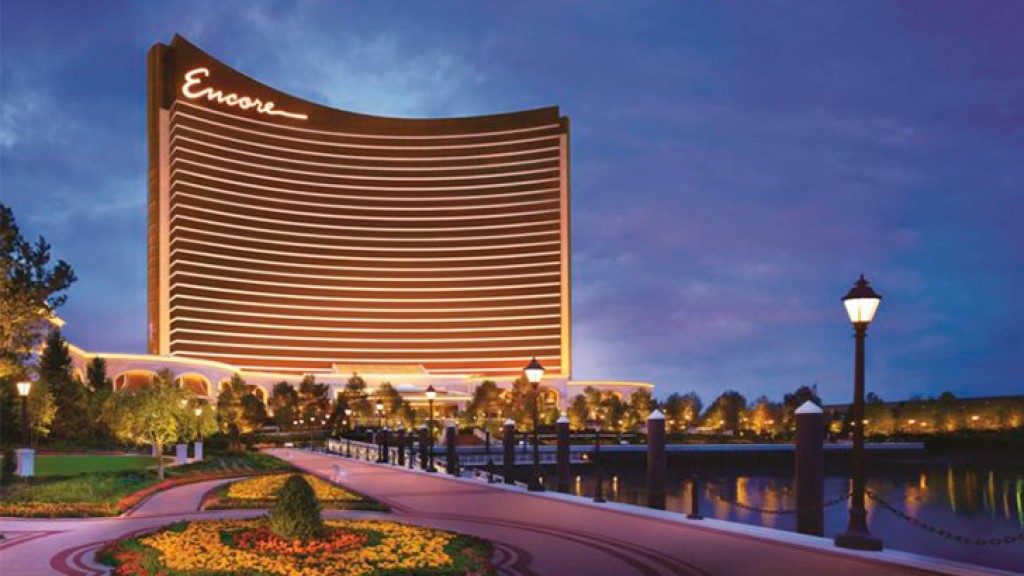
FBT Everett Realty agreed in 2012 to sell the land on which Encore Boston Harbor now sits to Wynn Resorts for $75 million if the casino company secured a state casino license. Wynn got the lucrative Boston-area casino license, but the Everett property ultimately sold for $35 million. FBT alleges that the Gaming Commission, concerned about the possibility that someone with ties to organized crime stood to benefit from FBT's sale, improperly coerced Wynn Resorts into reducing the purchase price of FBT's Everett land by threatening to otherwise disadvantage Wynn's license application.
Justice Scott Kafker wrote in an opinion released Monday that a lower court judge made an error by dismissing all of FBT's lawsuit last summer (the SJC affirmed the lower court's decision to dismiss a claim that the commission had interfered with a contract) and sent the case back to the Superior Court for a fresh round of fact-finding.
"Whether the commission directed such a compelled transfer of property, or merely accepted it as a cure to its concerns about undisclosed criminal ownership interests at FBT, cannot be decided without further discovery," he wrote.
For years, the Gaming Commission has been hounded by various legal issues around the Everett land, the Boston-area licensing process and Wynn Resorts. The commission's inaugural chairman, Stephen Crosby, was at the center of accusations of bias in the process that resulted in Wynn Resorts securing the Boston-area casino license and he resigned in 2018 amid more cries of bias as the commission prepared to release its investigation into Wynn Resorts' handling of sexual misconduct allegations against Steve Wynn. The commission said Monday it is reviewing the latest SJC opinion.
"We are pleased that the SJC affirmed the dismissal of the intentional interference with a contract claim and will address the remaining claim through appropriate legal proceedings," Gaming Commission spokesman Tom Mills said Monday.
FBT Everett Realty bought the land in question for approximately $8 million in 2009, before casino gaming was legal in Massachusetts. The group explored using the site for big-box retail but things changed in late 2011 when casino gaming was legalized.
FBT Everett Realty and Wynn Resorts entered into an agreement in late 2012 giving the casino company the option to buy the Everett parcel for $75 million if it secured the region's gaming license.
While the Gaming Commission's Investigations and Enforcement Bureau was looking into Wynn Resorts and the option agreement on the Everett land, its investigators developed concerns that a convicted felon with apparent ties to organized crime, Charles Lightbody, had a hidden ownership stake in FBT Everett Realty and that a windfall going to someone connected to organized crime would undermine public confidence in the state's casino licensing process. (Lightbody and two other FBT principals were indicted in 2014 on federal charges related to alleged efforts to hide Lightbody's financial interest in the Everett land and all three were acquitted).
Karen Wells, the director of the IEB and now executive director of the Gaming Commission, informed Wynn executives of the concerns and told them that "their position regarding [FBT] receiving a financial windfall as a result of the gaming facility was something the IEB would report on regarding [Wynn's] suitability," Kafker's opinion quotes Wells as saying during a commission meeting.
Having been told that the $75 million purchase from FBT would be a factor in the commission's decision on whether Wynn Resorts would be suitable to hold a Massachusetts casino license, the company had the land appraised for its highest and best non-casino use and in November 2013 agreed with FBT Everett Realty to reduce the land sale price to $35 million to match what the appraiser said it would be worth for "large box retail." Wynn got the license and the land deal was finalized for $35 million in late 2013.
"Although the relevant facts are disputed, the record -- when viewed in the light most favorable to FBT -- indicates that the commission intended to deprive FBT of any casino-use premium on the sale of the Everett parcel and that it coerced Wynn into renegotiating the price for the parcel, reducing it from $75 million to $35 million, by threatening to find Wynn unsuitable for a license," Kafker wrote.
FBT sued the Gaming Commission to recover the lost $40 million "casino-use premium." While the SJC ruled Monday that a lower court was correct to dismiss claims of tortious interference with a contract, it said the Superior Court should look more closely at whether the Gaming Commission's actions constitute a "regulatory taking," essentially whether the commission's actions and regulations restrict the owner's rights to such a degree that it becomes the functional equivalent of a physical seizure of property.
"Only when the disputed facts surrounding the commission's actions are fully developed and resolved will it be possible to properly decide FBT's regulatory taking claim," Kafker wrote.
Categoría:Casino
Tags: Sin tags
País: United States




Event
iGaming tech leader Cristina Turbatu commends ICE Barcelona's vision for Hall 7
Tuesday 20 Oct 2026 / 12:00
CGA Showcases Canada’s Competitive Edge at ICE Barcelona
Tuesday 13 Oct 2026 / 12:00
ICE Barcelona Hosts WorldGaming-Backed Nineball Championship in 2027
Tuesday 06 Oct 2026 / 12:00
SUSCRIBIRSE
Para suscribirse a nuestro newsletter, complete sus datos
Reciba todo el contenido más reciente en su correo electrónico varias veces al mes.