How US sports betting won over the Leagues and ESPN
Monday 14 de August 2023 / 12:00
⏱ 4 min read
(New York).- Online sports betting has exploded in the few years it has been widely legal in the US. Companies like DraftKings Inc. and FanDuel Inc. are ubiquitous on TV, radio, billboards and social media. All the major US sports leagues now have partnerships with betting platforms. In August, ESPN struck a 10-year, $1.5 billion deal with a casino operator to license its widely known brand, capitalizing on the surge in interest in sports betting as more states have legalized it.
1. How did all of this happen so fast?
Until just a few years ago, if you wanted to bet on a sporting event in the US, you’d have to either travel to Las Vegas or patronize an illegal bookie. All that changed in 2018 when the US Supreme Court allowed states to legalize sports gambling. Today, gamblers in a large majority of the country can place bets on dozens of mobile apps known as sportsbooks without ever leaving their couch. Most of the betting occurs on either FanDuel or DraftKings. That’s made it hard for others to make inroads. In July, Fox Corp. said it would wind down Fox Bet, a wagering business it offered in partnership with Flutter Entertainment Plc. Some smaller sports betting apps have also called it quits, unable to survive in an expensive, competitive landscape. Industry giants are pouring money into ads and promotions and looking for new ways to attract new gamblers. Las Vegas-style sports bars with betting kiosks have opened in many stadiums, including in Wrigley Field in Chicago, State Farm Stadium in Arizona and Capitol One Arena in Washington.
2. How is the business faring so far?
Despite the popularity of online betting — Americans have wagered more than $220 billion on sports in the last five years — many operators have yet to make a profit, and the tax revenue has often fallen short of expectations. On top of that, policymakers and leagues are on the lookout for higher addiction rates and game-fixing.
3. What is ESPN doing and why?
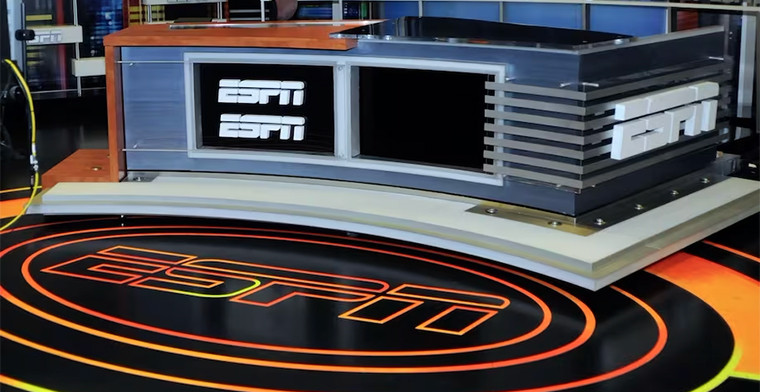
The cable sports programming juggernaut owned by Walt Disney Co. has had ties to sports gambling for years, airing betting-related programming and integrating sportsbook marketing on its website. It also took a stake in DraftKings in 2019 as part of its acquisition of Fox’s entertainment assets. But ESPN’s deal with the casino operator, Penn Entertainment Inc., creates a deeper relationship with gambling since its name will be on a betting app. Under the deal announced in August, Penn says it will rebrand its Barstool Sportsbook as ESPN Bet starting in the fall of 2023. Penn, a regional casino operator, will pay ESPN $1.5 billion in cash over the 10-year term and grant ESPN $500 million of warrants to buy Penn shares. The arrangement allows ESPN — and its family-oriented parent company, Disney — to make money from online betting without having to take bets itself. And ESPN could use the revenue: Although it’s still profitable, its traditional cable business is shrinking as subscribers replace cable TV with streaming services.
4. If online sportsbooks are so popular, why are they struggling to make money?
News headlines often focus on the billions of dollars wagered with sports betting apps. But that number, known as the “handle,” is misleading. Sportsbooks return much of that money to winning customers. The percentage that companies actually keep, known as the “hold,” is usually less than 10%. It gets even harder for sportsbooks to turn a profit after they spend a lot of money on TV ads and promotions, like offering free bets, to lure new players. Wall Street wants to see profits, so sportsbooks have responded by promoting more “parlays” — or bets that string together multiple outcomes. Such wagers are more profitable because they’re harder to win. Still, the longer-term question is whether the industry can expand to more states beyond the more than 30 where it’s already allowed. In November 2022, California voters rejected a measure that would have legalized online sports betting. Another large state, Texas, also hasn’t approved it.
5. Why have tax receipts disappointed?
State lawmakers legalized sports betting in part because they wanted to bring in revenue to finance projects that serve the public good, like fixing roads or improving education. People were already betting illegally on sports, the thinking goes, so why not bring it out of the shadows and generate tax dollars? But sports betting has turned out not to be a big windfall for states, experts say. Sportsbooks typically pay state taxes only on the amount of money they keep, which is much smaller than the amounts wagered. What’s more, many states that legalized sports betting have created relatively low tax rates, and some let sportsbooks exclude the cost of “free bets” and other bonuses meant to draw new customers, leaving tens of millions of dollars in potential taxes on the table.
6. What do we know about the negative effects on gamblers?
Britain’s sports betting market is more mature and offers a glimpse into the potential downsides of legalized sports betting in the US. The UK has allowed the industry to mostly regulate itself and has seen a surge in gambling addiction and suicides linked to gambling. The UK government has been examining whether the industry is doing enough to protect younger or compulsive gamblers and has banned the use of credit cards for gambling and limited sports betting advertising. In the US, states have started reporting an increase in calls to help lines and other early signs that addiction issues are mounting.
7. Where are there signs of game-fixing caused by legal sports betting?
It’s too early to tell how pervasive it is, but authorities are worried it could become more so as online sports betting spreads. After the Supreme Court deregulated sports betting, the Federal Bureau of Investigation created a division to investigate corruption in sports. Around the world, match fixing has been detected in soccer, tennis and even handball. Experts say rigged games are more likely in sports that don’t draw so much attention. College athletics could be especially vulnerable because many student athletes aren’t paid like professionals. Sportradar, a Swiss company that investigates match fixing, identified 903 suspicious matches across 10 sports in 76 countries in 2021. The firm estimates that match-fixers hauled in profits of about $177 million that year.
Categoría:Sportsbook
Tags: Sin tags
País: United States
Región: North America




Event










SiGMA North America 2026
01 de September 2026
Affiliates and Acquisition: Keys to Regulated Markets in North America
(Mexico City, SoloAzar Exclusive).- During SiGMA North America 2026, Cristopher Guzmán Reyes, Head of Affiliates at Logrand Entertainment Group; Guga Júnior, influencer and slots expert at Scalar Partners; Andrés Gómez, Head of Latin America Go-to-Market Strategy at Admattic; Yambot Aguilera, Gaming and Finance Sales Director at Google; and Paula Gabriel Jiménez, Advertising Client Growth Director for Microsoft at Aleph, analyzed the state and provincial affiliate ecosystem in North America, as well as the acquisition challenges in regulated markets.
Thursday 24 Sep 2026 / 12:00
Jordi Sendra, CEO of Alea: "Latin America is one of our most important regions"
(Mexico City, SoloAzar Exclusive).- The CEO of Alea analyzes the company's participation in SiGMA North America, the potential of Mexico and Brazil and the growth opportunities in North America and Latin America. It also reviews the new features presented during the event, including the new sportsbook vertical and Alea Jackpot.
Wednesday 23 Sep 2026 / 12:00
CP Games at SiGMA North America: Localization, Integration, and Regional Growth
(Mexico City, SoloAzar Exclusive).- Following a successful showcase at SiGMA North America, Caio Ruiz, Head of Growth and Strategic Partnership at CP Games, reflects on the event's key takeaways. He discusses the critical need for localized strategies across the Americas, the importance of flexible technical integrations, and the company's next steps in navigating the diverse gaming landscapes of LatAm and North America.
Tuesday 22 Sep 2026 / 12:00
SUSCRIBIRSE
Para suscribirse a nuestro newsletter, complete sus datos
Reciba todo el contenido más reciente en su correo electrónico varias veces al mes.